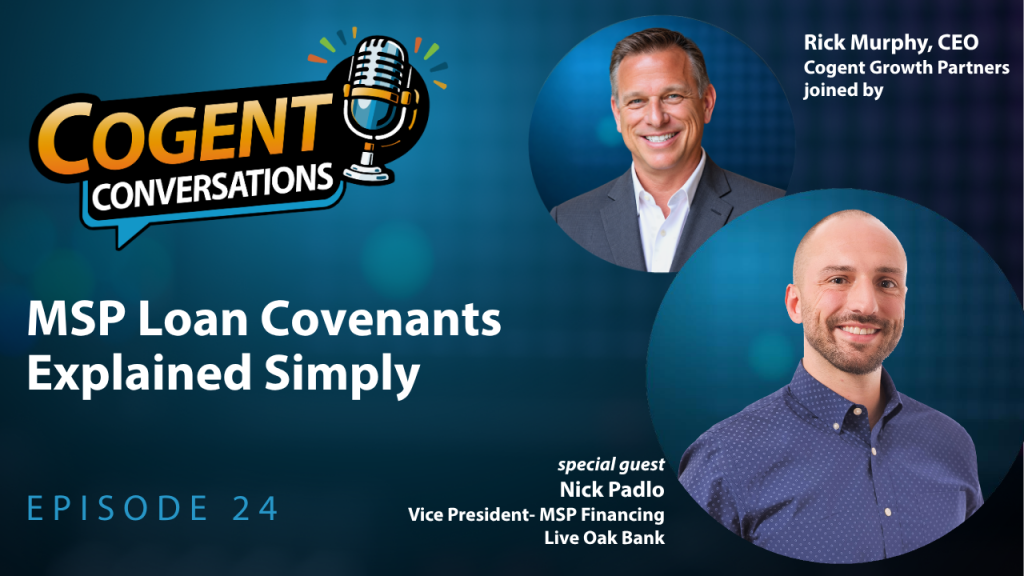
Every MSP owner who thinks about buying, or building toward a bigger sale, eventually lands on the same question: where does the money come from? Nick Padlo of Live Oak Bank, a lender focused on MSPs, sits down with Joe Pannone and Rick Murphy to compare bank financing with private capital, and makes a strong case for keeping 100% of your ownership while you grow.
From SBA-backed loans to conventional senior debt, the conversation covers what each option makes possible, how earnouts and seller notes layer on top, and one process detail, a lender’s preferred status with the SBA, that can take months off a closing. It is a practical walk-through for anyone curious how buyers stretch a deal beyond the cash in their account.
Short version: the right financing keeps your ownership intact and your deal moving, and a lender who already speaks MSP makes both easier.
Watch the episode and be sure to subscribe: Watch Cogent Conversations Episode 23
Key takeaways from this episode
- Bank financing lets you keep 100% of your equity. Private capital trades ownership for funding, while a lender provides leverage and leaves ownership with you. Nick adds that Live Oak Bank’s flexible terms with no prepayment penalties let owners start with a smaller loan and step up as the company grows, and many use that path to reach the EBITDA level that attracts larger buyers.
- Straightforward lending is out there, so shop around. Rick’s experience raising capital over the years is that the cleanest financing comes with standard interest rates, sensible amortization, and no ownership stake attached, and he calls working with Live Oak Bank refreshing for exactly that reason. He contrasts that with lenders who ask for warrants and double-digit rates, a combination worth recognizing before you sign.
- Deal structure can sit right on top of a loan. Earnouts and seller financing can ride alongside bank debt, which helps a buyer close the gap between the cash on hand and the cash a seller wants at closing. A repayment period measured in years keeps cash flow comfortable while the acquired company settles in.
- A lender’s SBA status can change the calendar. SBA backing works like an insurance policy for the bank, and a lender with Preferred Lender Partnership status can approve in-house. Without it, the package goes to the SBA for a second review, which is where the six-month closings come from. As Rick puts it, time kills deals.
- SBA and conventional loans each have a sweet spot. Nick’s rule of thumb: SBA shines when a buyer wants high leverage, roughly five to six times or more, with minimal cash down, while conventional senior debt typically sits around three times, with seller notes and equity filling out the structure. Many owners start with SBA on a first deal and move to conventional as EBITDA approaches $1 million.
- Earnout-style structures still work with SBA loans. SBA rules specifically rule out a traditional earnout, yet a performance-based seller note with a clawback delivers a very similar result. Nick often builds a deal both ways so the buyer can compare the options side by side.
Subscribe to our YouTube channel: @cogentconversations
If you are sizing up an acquisition, or building toward the EBITDA that opens bigger options, a financing conversation early in the process can shape every decision that follows. We are glad to talk through which structures fit your situation.